

Starting Preschool: What Does a Successful Transition Actually Look Like?
Lately we’ve welcomed several new tamariki to Sugartree Lane, and it has been a lovely reminder that no two preschool transitions look quite the same.
Some children walk through the door and start exploring before Mum or Dad has even put their bag down.
Others stay close to their parent for the first few visits. They watch. They take everything in. They might play happily but regularly come back for a cuddle or check that their person is still there.
Some children are comfortable saying goodbye surprisingly quickly. Others need several visits, shorter days or a more gradual introduction before they’re ready.
All of those can be successful transitions.
There’s no prize for the fastest goodbye
It’s easy to think a child has “settled” when they stop crying at drop-off. But we think a successful transition is about much more than that.
We’re looking for signs that your child is beginning to think:
I know this place. I know these people. I feel safe here.
That sense of security takes time to build.
Your child is getting to know new teachers, new children, new routines, new sounds and a completely new environment. At the same time, their teachers are learning about them.
What makes them laugh? What comforts them? What are they interested in? When do they get tired? How do they communicate when they need something? Who are they beginning to connect with?
Those relationships matter.
Te Whāriki, New Zealand’s early childhood curriculum, places relationships, wellbeing and belonging at the centre of children’s learning. Ministry of Education guidance on transitions also talks about the value of familiar, unhurried routines, predictability and genuine partnerships between whānau and kaiako.
That’s very much how we approach starting preschool at Sugartree Lane.
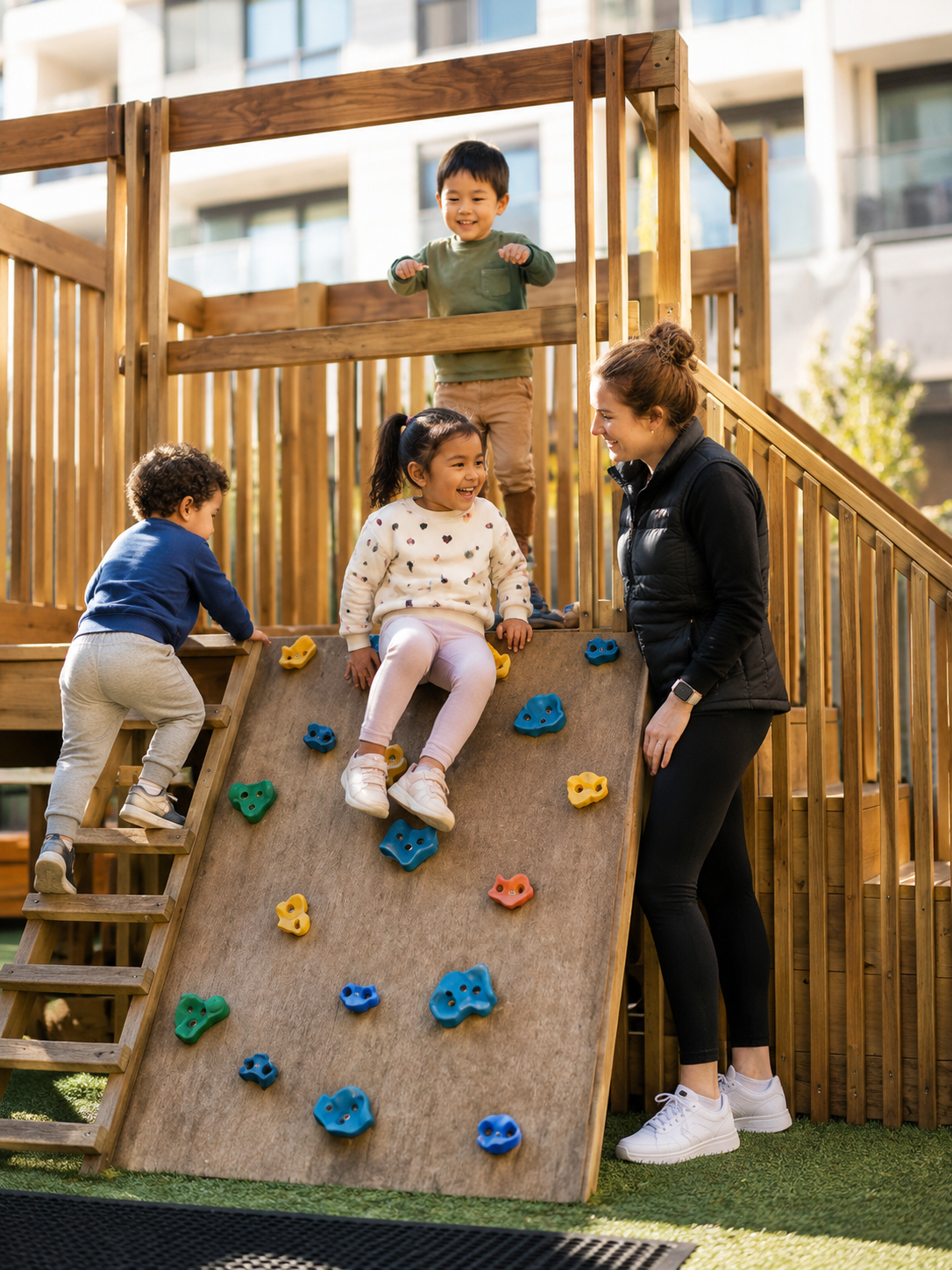
What might the first few visits look like?
There isn’t a fixed formula.
For many families, we’ll start with a visit where a parent or caregiver stays at the centre. Your child can explore knowing that their familiar person is nearby. We aim to do this over a week for about an hour at a time, but it depends on your schedule and availability.
As they become more comfortable, they might begin moving further away from you to play. They might start interacting with a teacher or another child.
Then we can try a short separation.
That might be 20 minutes for one child and a couple of hours for another.
From there, we gradually work towards their usual preschool day.
We’ll talk with you throughout the process about how things are going and what we think your child needs next.
Small moments can tell us a lot
Progress during a transition isn’t always dramatic.
Sometimes it’s a child reaching for a teacher’s hand for the first time.
It might be accepting comfort from someone other than Mum or Dad.
It could be sitting down for morning tea, joining another child in play or confidently heading towards a favourite activity when they arrive.
And one of our favourites is when a child becomes so busy playing that, for a little while, they completely forget to check where their parent is.
These little moments tell us that relationships are forming and the environment is becoming familiar.
What if my child cries
when I leave?
They might.
Tears at drop-off don’t automatically mean something has gone wrong.
Your child can be developing a strong relationship with their teachers and enjoying their day while still finding the moment of separation difficult.
We look at what happens after you leave too.
Can your child accept comfort from a teacher? Do they begin engaging with play? Are the periods of upset becoming shorter? Are they developing relationships and showing increasing confidence around the centre?
Those things give us a much fuller picture than the goodbye itself.
And if something isn’t working, we’ll talk with you about it.
We’ll work with your family
Starting preschool affects parents too.
For some families, there’s plenty of time for several transition visits. For others, work commitments or other circumstances mean the timeframe is tighter.
Wherever we can, we’ll work with you to create a transition schedule that suits your child and your family, while also fitting with what we can comfortably support at the centre.
We also stagger new transitions where possible. Having several new children separating from their parents at exactly the same time isn’t particularly helpful for the children, the parents or our teachers!
Giving each new tamaiti the time and attention they need matters more than rushing the process.
You know your child.
We know our centre.
A good transition works best as a partnership.
You can tell us the things we can’t possibly know yet: your child’s routines, words, favourite activities, comfort items, fears, interests and the little tricks that work at home.
Our teachers can tell you what they’re seeing once you’re gone and help judge when your child might be ready for the next step.
The Ministry of Education describes effective transitions as a collaborative process between children, parents, whānau and kaiako. It also recommends giving children continuity, predictability and agency as they adjust to change.
In other words, there isn’t a magic three-day transition programme that works for every child.
We find what works for yours.
And then, one day...
You walk through the door and something has changed.
Your child spots a teacher they know.
Or another child calls their name.
They remember exactly where their favourite dinosaur is kept.
They put down their bag and head off to play.
The place that was completely unfamiliar a few weeks earlier has become part of their life.
That’s what we’re working towards.
Not the fastest transition.
Not a tear-free transition.
A child who feels safe, known and increasingly confident that this is their place too. 💛
Thinking about starting preschool in Auckland? You’re very welcome to visit Sugartree Lane, meet our teachers and talk with us about what a transition could look like for your child.